JEA now requires a reduced-pressure (RPZ) backflow preventer on most irrigation systems. If your sprinklers run off a JEA city-water meter in Jacksonville or St. Johns County, you most likely need an RPZ installed or replaced — and Aqua Premier handles it.
A backflow preventer is the safety device that keeps the water in your sprinkler lines from flowing backward into the public drinking-water supply. It matters because irrigation is considered high-hazard — the lines hold standing water, sit in soil and mulch, and many systems inject fertilizer or run off a pump. A drop in city pressure (back-siphonage) or pump pressure (back-pressure) can pull that water back toward the main, so the water authority requires a backflow assembly on every irrigation service. Need backflow help in Ponte Vedra, Jacksonville or St. Johns County? We've got you.
Florida's building code has required a backflow preventer on residential in-ground irrigation since 1990, and JEA's Cross-Connection Control Program requires a reduced-pressure (RP/RPZ) device on in-ground irrigation systems. A double-check assembly is only grandfathered on services installed before May 2014 — any new system, or a replacement of a failed or older unit, has to be brought up to an RPZ. In plain terms: if your irrigation runs off a JEA city-water meter, you most likely need an RPZ backflow installed or replaced. St. Johns County and the City of St. Augustine run the same kind of cross-connection program for the homes they serve.
Two independent check valves with a relief valve between them. If a check ever fails, the relief valve dumps the water to the ground so nothing can siphon back into your drinking water — the highest level of protection. It must sit above ground with a clear air-gap discharge (never buried in a box). This is what JEA requires on irrigation.
Two spring-loaded check valves in one body, with no relief valve. It's a lower-hazard device, still allowed on irrigation services installed before May 2014 — but it can no longer be used for a new install or a replacement on JEA water. When an old double-check fails, we replace it with a code-compliant RPZ.
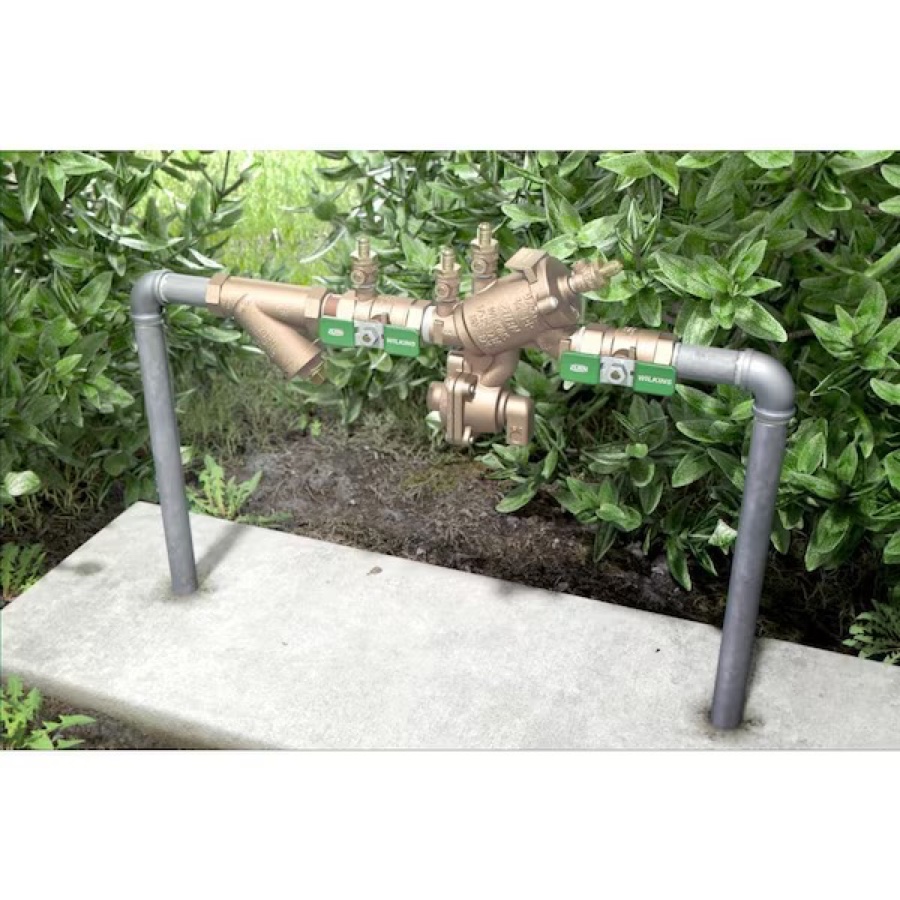
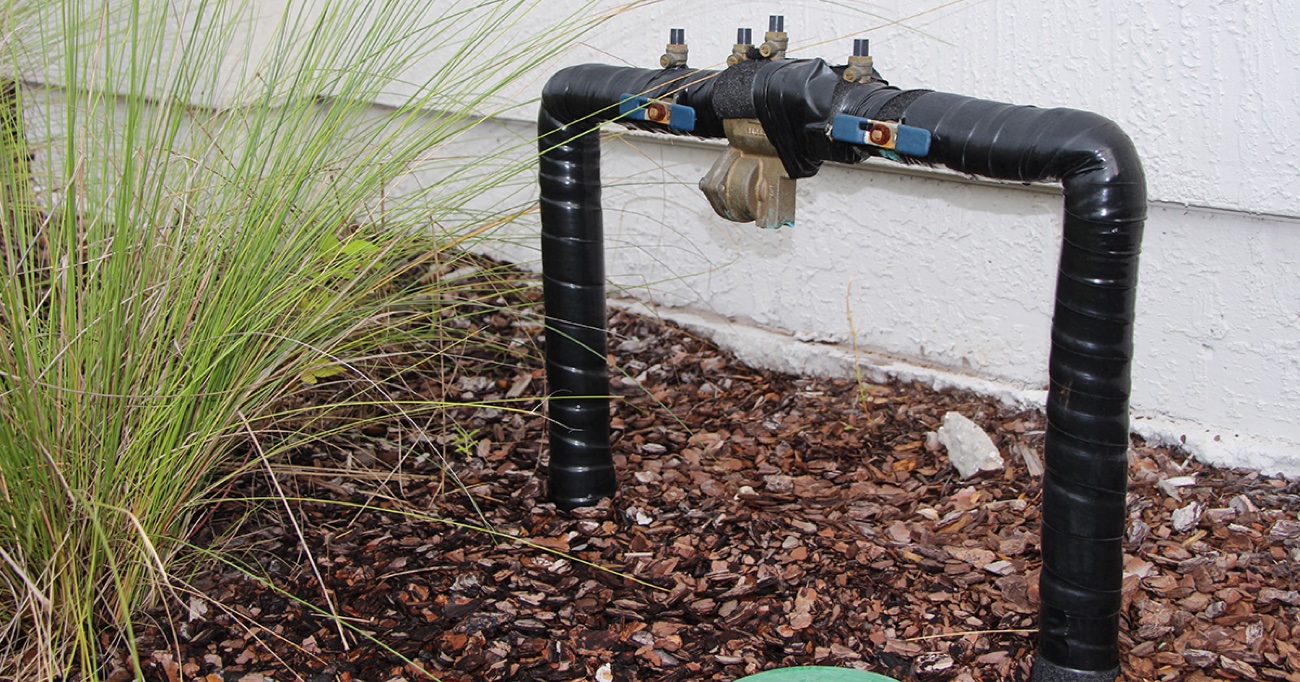
Because an RPZ lives above ground, our Northeast Florida cold snaps can freeze and crack the brass — and a constant drip from the relief port usually means a fouled check valve. We repair or replace failed and freeze-damaged units, and insulate them properly so they survive the next freeze.
We pair backflow work with the rest of your system — sprinkler repair, new installs, pumps & wells and smart controllers — across Jacksonville, Ponte Vedra, Nocatee, St. Johns and St. Augustine.
Your irrigation runs off a JEA or St. Johns County city-water meter — especially if any of these apply.
Yes. Florida's building code has required a backflow preventer on residential in-ground irrigation since 1990, and JEA's Cross-Connection Control Program requires one on every dedicated irrigation line tied to a JEA water meter. It protects the public drinking water from fertilizer, chemicals and standing water in your sprinkler lines.
JEA requires a reduced-pressure (RP/RPZ) backflow preventer on in-ground irrigation. A double-check (DCVA) is only grandfathered on irrigation services installed before May 2014; any new install, or a replacement of a failed or older device, has to be brought up to an RPZ. If your sprinklers run off a JEA city-water meter, you most likely need an RPZ.
Yes. Every new in-ground irrigation system we install on JEA or St. Johns County water includes a reduced-pressure (RPZ) backflow, set above grade to code.
Yes. We swap out old double-check devices and failed or out-of-date assemblies for a new code-compliant reduced-pressure (RPZ) backflow, installed above grade.
Irrigation is high-hazard: the lines hold standing water, sit in soil and mulch, and many systems inject fertilizer or run off a pump that can create backpressure. An RPZ has two check valves with a relief valve between them — if a check fails, the relief valve dumps the water to the ground so nothing siphons back into your drinking water. A double-check has no relief valve, so it's only allowed for lower-hazard, grandfathered services.
Yes. A constant drip from the relief port usually means a fouled or failing check valve; cracked brass or split bonnets are typically freeze damage from a Northeast Florida cold snap. We repair or replace the assembly and insulate it properly so it survives the next freeze.
It has to. An RPZ must be installed above grade with clearance and a clear discharge — it cannot be buried in a box or pit, because the relief valve needs an air gap to drain. We install and relocate backflows to meet JEA and St. Johns County code, then screen them tastefully in the landscaping and insulate them for winter.
Install, replacement or repair — book online in under a minute, or call and a licensed Aqua Premier tech will be in touch fast.